A unique and viable approach to establishing local food self-reliance and building stronger communities.

Saturday, August 24, 2024

Why We Grow and Eat "Organic" Food

Organics - Better for Health!
March 2026: We've been saying it for years: the key to health for people and the planet is to switch to growing and eating organically grown foods. Finally, it seems that the connection between ultra-processed foods (which are heavily subsidized by the federal government) and chronic diseases is being revealed. Here is a short (13 minute) video which summarizes this perspective. LINK or this one: Enough Is Enough: Video on Food Additives
 
 
(The following article was originally posted several years ago...Perhaps its time has come!) If you've been wanting to increase the amount of organically grown foods in your diet this post is for you!
Here are many reasons including the beneficial effects on the environment, the people who grow and harvest our food, the animals raised to provide food and your own health.

Thank you for taking this important step in your life.
Chris and I eat almost exclusively organically grown foods when we're at home. At 73 and 60 years old respectively (Feb. 2023), we are both very healthy. We take no prescription medications and, in fact had a bottle of aspirin pass it's expiration date in our medicine cabinet once because we were too slow in using it for occasional muscle soreness or headaches! We each have had three colds in the last 16 years but no other illnesses that caused us to be bed-ridden for even a day. Our food is our medicine (along with other healthy lifestyle habits including meditation, stretching and exercise practices and a generous lifestyle geared towards service) and we feel strongly that a societal shift towards an organic, whole foods, plant-based diet would have significant positive effects both on people's personal health and the health of the natural environment as well.
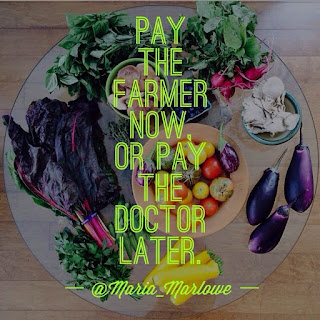
Image credit: Maria-Marlowe
We are at an advantage over most people as our large gardens provide a high percentage of the foods we eat but for many years we have made it a priority to let our food-budget reflect our values and we only buy groceries that are organically grown. The only times we don't eat organic are when we eat out at restaurants or are visiting friends, which amounts to three to six times per month.

This post offers an overview of what we feel to be the most important reasons to shift to an organic diet. For those readers who have the financial means to make this shift entirely, we encourage you to jump into an organic life-style whole-heartedly. We also encourage you to cultivate relationships with local farmers through shopping at farmer's markets and co-ops that feature local, organic foods or joining a CSA (Community Supported Agriculture). See also: Seven Tips for Shopping at a Farmer's Market

We realize that, for many people who are living close to the edge financially, that committing to buying all your groceries organically-grown may be impossible at this time. If that is the case, consider making smaller incremental changes such as committing to only buying organically and humanely produced animal products (where farm chemicals become most concentrated) or only buying organic "treat foods" (whatever that means for you). Their higher prices may encourage you to eat less of these items which will be better for your own health and  for the health of the planet.

Another option to increase your intake of organic garden-produce is to start your own garden, or start or join a community-garden. LINK: So, you want to start a Sharing Garden.

We like to remind ourselves as we adopt new lifestyle choices that "it's a direction, not perfection." Be gentle on yourself as you make new changes and, if sometimes you decide to eat something on your "no-no list", do it consciously, do it with joy and then re-commit to following your chosen dietary guidelines once again. Happy eating!

Image credit: Enki quotes.com
So, here are some of the top reasons we feel it is important to eat organically grown foods.

Healthier for you: Ingesting farm chemical residues isn't good for your health. Many of these chemicals can build up in one's tissues over time so, even though we may only eat small amounts with each meal, their accumulated amounts can be significant over a life-time. Also, children tend to be more susceptible to environmental toxins as they are building new tissues at a faster rate than adults.  LINK-Pesticide Action Network
Any farmer who grows "organically" may not use herbicides, pesticides or fungicides - unless they have been approved by the organic-certification agencies.
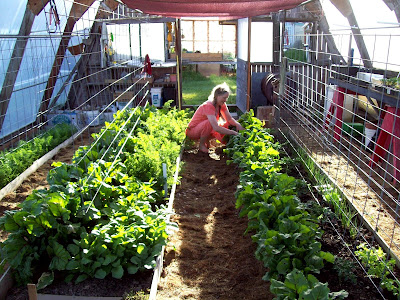
Slow-grown food is more nutrient-dense.
More nutrient dense? The truth is, most organic-farmers struggle under the same competitive conditions as farmers who grow using conventional practices. This means, they need to invest the least amount of money in fertilizers and other soil amendments, and grow their produce as fast as possible, to get it to market ahead of their competitors to make the most profit. These practices lead to more "water-weight" and less nutrient-dense foods. This means that the vitamin/mineral content may not vary much between organic and conventional farmers.  On the other hand, some studies suggest that, on average, organically-grown produce is consistently more nutrient-dense and lower in pesticides and heavy metals. Nutrient Levels in Organic vs. Conventional Foods
This is why it is important to know your farmer so you can confirm that their food is slow-grown and that the farmers are replacing the minerals that get depleted in their soil from harvesting crops.
Adding compost-tea to our gardens is one way we replace many of the nutrients that are depleted through harvesting.
GMO versus organically-grown:  There is still debate about whether foods produced from Genetically Modified Organisms (GMO's) are a health risk to humans. We are strongly opposed to them because of the compelling research pointing to the possibility that eating GM plants, or livestock raised on GMO feed can lead to leaky-gut syndrome and a whole slew of health problems including severe food-allergies, learning disabilities and autism-spectrum disorders in children. Autism and GMO's LINK Institute for Responsible Technology-a GMO watchdog group. Genetically Modified plants and animals have the potential of interbreeding with plants and animals that were not genetically modified, with unforeseen consequences. Some GM plants (corn and soy) are specifically bred to be resistant to Round-up and other herbicides meaning large amounts of these chemicals can be used to grow them. This leads to well-documented cases of super-weeds that have become resistant to herbicides and require ever stronger chemicals to keep them in check. LINK: The Dangers of Round-up Ready Foods, LINK-GMO Health Risks  Also, GM corn and soy are used extensively in livestock-feed so you can imagine how these farm-chemicals concentrate in their tissues.
We feel strongly that it is important to avoid eating any genetically modified plants. We feel it is especially important to avoid eating animal-products (meat, dairy, eggs) from animals fed on GM feed.
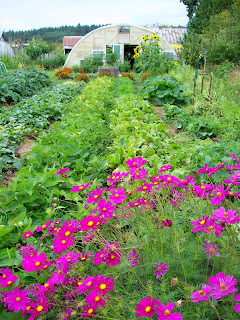
Sharing Gardens - 2019
But what about just eating non-GM foods? Well yes, this is a step in the right direction but just because something is non-GMO does not mean that it's grown without farm chemicals. Industrialized farming uses plenty of chemicals in growing the food. Did you know that it is also a legal practice for farmers to use Round-up as a desiccant (which causes withering and drying in plant tissues) to artificially dry crops if conditions are too wet for the crops to fully ripen in the field? LINK-Wikipedia, LINK-EcoWatch.
By definition, organic farmers are not allowed to grow Genetically Modified crops, or feed them to their livestock.
Better for the environment. Anyone following the news knows that our environment is under attack from all sides. Industrial farming is one of the biggest culprits.

Pollinators are under siege from the practices of growing "mono-crops" (all one variety) for thousands of acres, offering no variety in their diet of pollen, and many farm-chemicals are damaging to their health as well. LINK - Why growing sunflowers is great for bees.

Honey-bee on tansy. We let some weeds flower in our garden intentionally as they provide important pollen-food for beneficial insects. Here's some good news: Grassroots bee petition in Bavaria forces greener farming practices: 
Soil health: Industrial farming - through over-tilling and depleting soil of organic matter makes soils void of all life and destroys the structure of the soil itself which no amount of added fertilizers and chemicals can restore.
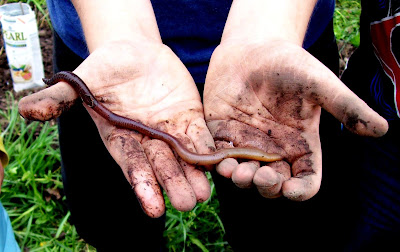
Healthy soil means healthy soil-organisms. Eight-year old, Ricardo holds an earthworm found in our gardens.
Industrial farming is a major source of water-pollution. Industrial farming has negative effects on the world's water for many reasons. Here are a few: Heavy Metals build-up; Algae Blooms, Dead-zones and Acidification; Nitrates; Pathogens and Over-use of water reducing water-levels in our aquifers. (LINK-How Industrial Agriculture Effects Our Water)

Many bird species have a hard time finding enough insects to feed their young. Farm chemicals tend to concentrate in the tissues of animals, the higher-up you go in the food chain as Rachel Carson so famously proved in her landmark book from the 1960's titled Silent Spring.
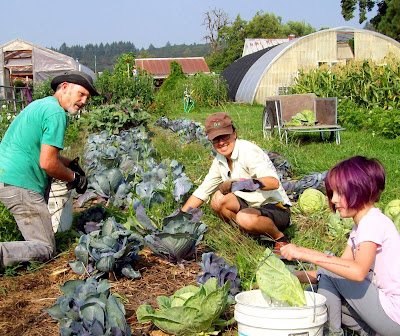
Thorin, Eliza and Adri harvest cabbage, 2018.
Be aware too, that this principle of chemicals concentrating in tissues applies to foods raised for human consumption too. The accumulation of these chemicals in our own bodies will therefore be less with a plant-based diet. The more meat, dairy and eggs one eats, that are not organically-raised, the higher concentrations people have in their bodies of these chemicals. Bear in mind too that the quality of life for livestock animals grown organically is more humane as well.
Organic farming practices keep our air, water and soil healthier and can even contribute to the increase of viable habitat for wild plant and animal species.
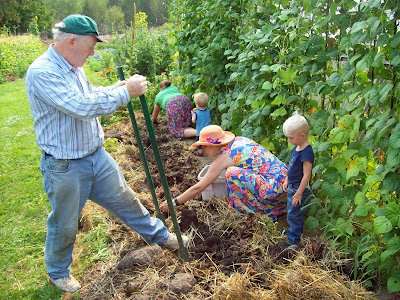
Organic farming is better for the farmers and farm-workers who grow our food. Sharing Gardens volunteers digging potatoes 2018.
Healthier for the farmers and farm-workers: When we use our purchasing power to make a statement about our values, we are directly contributing to healthier lifestyles for everyone involved in the food-growing community. LINK - Agricultural Chemicals and Human Health
In this complex world of competing dietary studies which often offer contradictory results it can be difficult to know who to trust and which dietary practices will be best for your health and the health of the environment on which every living things depends.

If you have been feeling on the fence about whether to make the commitment to eating more organically-grown foods, we hope this post has helped you make that shift. Just remember that wise saying, "You can either pay your farmer now, or pay your doctor later." We think this is good advice.
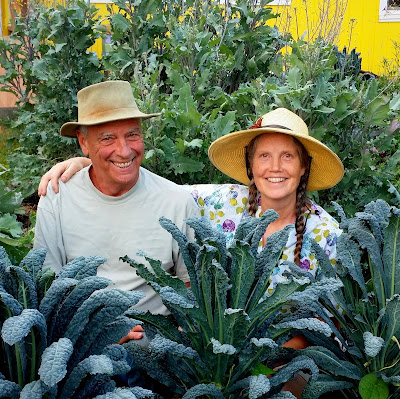
Get to know your farmers! Chris and Llyn in the Sharing Gardens, your friendly, neighborhood "farm-acists".


Bella loves kale!
Other relevant LINKS:

Organic diet intervention significantly reduces urinary pesticide levels in U.S. children and adults - Science Direct 

What the pesticides in our urine tell us about organic food - The Guardian

The States in America That Use the Most (and Least) Glyphosate - Zero Hedge

What's in standard 'fast food'?


Monday, May 6, 2024

15 Years! and Still 'Growing' Strong


Spring's abundance has fully arrived! We're harvesting cart-loads of greens on a bi-weekly basis which we eat ourselves and share with supporters of the gardens. We continue to donate the sizable surplus to food charities. No one is ever charged money for the food that is grown. 

This post shares highlights of what's currently happening at the Sharing Gardens as well as seasonally relevant links. Enjoy! (Pic above: Oregon State University students after a morning of 'service learning' in the gardens. We had a lot of fun with this group! - See more below).


The Sharing Gardens just turned 15! On April 15th 2009 (tax day!) our friend Steve Rose (left) brought his tractor to our original site and broke ground.  It was the beginning of an amazing journey! 

I've had the intention of creating a post with photo-highlights from our previous seasons but we're just really busy at this time of year! Through the years we've made dozens of friends who have helped  in the gardens, had over 750,000 visits to our website and given away thousands of veggie starts and thousands of pounds of incredible, organic produce. We've renovated an 1875 farmhouse which we now live in and this land provides sanctuary to all who come here; human and non-human alike. Perhaps I'll get around to making that photo retrospective next winter!

2024 promises to be another year of abundance. One of the secrets of the Garden's ability to produce comes from Chris' years of experience with 'succession planting'. This means that, as one crop comes out of the ground, it is quickly replaced with another one, so very little of the gardens lay fallow during the peak growing seasons.

Lettuce is a crop that lends itself very well to succession cropping. Here's Jen, one of our newest 'sharegivers' (volunteers) with a head of Slo-bolt lettuce we started back in January. (LINK: Starting lettuce from seed... ) (LINK: Lettuce: Saving Seed
We start our lettuce, first in tofu-containers with holes drilled out of the bottoms (45-60 seeds per container).  Then we transfer each individual seedling into its own egg carton cell.
The advantage of this method is that we just tear off a single plant and plant it directly in the ground without removing the egg carton. The roots of the seedling grow right through the carton cells. This is a good method for any of our sharegivers who are new to gardening (or for kids) because it's so easy to plant the seedlings without damaging the roots.
From January through May, lettuce takes up a sizable proportion of our greenhouse space. All five rows, from left to right, are different varieties of lettuce. As the seasons warm, lettuce gets planted outside and eventually phased out altogether as it doesn't like the full summer's heat. Our greenhouse beds get filled with peppers and tomatoes and other heat-loving crops through the summer and into the fall.
This pic shows a half a week's harvest (late April). About 20% is enjoyed by me and Chris and garden-supporters. The rest goes to food charities. On May 6th we donated 48 pounds of lettuce, kale and beets with greens to Local Aid! (LINK: How it works/Benefits of the Sharing Gardens model)


Suzanne planting celery, April 2024. The large green plants in the upper right corner of the pic are last year's celery's second cutting. Celery is harvested in full by autumn's end and a whole new crop emerges during the winter months. It tends to be a bit more fibrous, but very flavorful so it's great in soups!

Llyn with a summer celery harvest, 2012

Here are two carrot patches, planted about two weeks apart in early and late January of this year. We did our first thinning of carrots that were too crowded in the last week of April. They're really starting to grow in size now.
Imperator carrots, 2023. These are a delicious, sweet and tender variety but they require very loose soil to reach this length. We grow them in our raised beds in the greenhouses.

Potatoes: We've been having greater success with potatoes these past two years. The main reason for this is that we've found we can grow potatoes in our greenhouse raised beds in the winter months when outside, the ground is too saturated and the temperatures too cold.

A bed of potatoes in April.

Donn and Chris beginning to dig that same bed (April 29). It wasn't our highest yield, but the spuds looked beautiful; no scab, no nibbles either from our resident mole population that tunnel all through our land (they seem to prefer eating the worms - of which we have aplenty!). And, if we'd waited till outside conditions were conducive to planting we wouldn't have had any at this time of year.
We have begun, and completed, our first outside batch of potatoes. Here are Chris and Donn digging holes and planting. Each potato 'seed' gets about a gallon-scoop of our premium home-grown compost. Soil is pushed back up in a mound. Grass-clippings are laid on thick in the paths between the potato mounds. Finally, a thick layer of dry leaves (collected last fall from our neighbors and tarped over the winter months) covers the whole bed - see below.

When potatoes begin to sprout, we take them out of the dark and put them on our front porch which gets indirect, northern light. This process, called 'chitting', causes the sprouts to become stout and the potatoes to store up solar energy (they get uniformly green under the skin). Using this method, we've found we can delay needing to plant the potatoes for several months till the ground and weather are more conducive to potato's growth. (LINK: Sprouting potatoes, What to do?)
Service Learning:
This year (2024) marks the 11th year we've been hosting 'service learning' students from Oregon State University. This is an excellent aspect of OSU's curriculum in which students in selected classes (in this case, Soil Science) receive a significant part of their grade from volunteering for four hours in the community. In late April, we had a group of five students from OSU join us for a Saturday morning. These young people were a particularly great bunch; asking tjoughtful, relevant questions, and really putting their backs into the projects we had for them to do. Here are  a few pics from their time with us:
Here, Belle and Trinity from OSU gather leaves to spread on our potato patch.

They got our potato patch completely mulched with leaves!

Adam, Allie and Julia - from OSU - loading the huge compost pile (that's been sitting under a tarp since late fall) into 5-gallon buckets. We estimate that the students filled and distributed about 70 buckets!

Chris drove the buckets out to the fields where he and Adam spread them on tilled ground for summer crops.
The rains threatened all morning but we only had a few misty-sprinkles. As seems to be our lucky pattern on service-learning days, the rains held off in earnest till the young people loaded back into cars to head home.

Here's a photo taken last July, from the same angle as the pic above. By clearing away the giant leaf and compost piles at the entrance to the gardens, the students made way for us to erect our iconic teepees on which we grow our favorite bean for drying and winter storage: the scarlet runner bean. (LINK: Grow Your Own Protein - Scarlet Runner Beans ) - (LINK: How to build a bean teepee)

Wildlife patches: When we first began gardening on this land in 2010, most of the three acres was overrun with tall grasses. The only big trees were a white oak, a yellow plum and a very neglected and overgrown golden delicious apple tree. One of the first things we did when we bought the land in 2014, was to begin planting trees. Not only did we plant fruit and nut trees, but we planted large amounts of aspen in groves. These were to break up the monotony of the grass, add to our supply of leaves (for composting) and to begin to provide some habitat for wildlife. Over the years we've added shrubs and wildflowers and allowed the grasses to fill back in between them.

Here's one of the original aspen groves. The aspens are 10 years old. This view, looks north (yellow farmhouse in the background, blue/grey workshop to the right).  There are some wild hazelnut bushes to the right, within the grove. We just planted yellow-willow and gooseberries in the strip of leaves in the foreground *that we grew from cuttings we'd rooted).

This is a similar view taken in 2010, the first year we gardened here. The dilapidated shed in the foreground was the pump-house for our well (it's been replaced). The grey shed behind it is the blue-grey workshop shown above. The greenish shed to the right became our garden shed. The aspen grove is now, what would have been the center of this picture.

Recently we've begun learning about the concept of food forests or guilds. These are patches of perennial plants with multi-levels (flowers, shrubs and trees) that fulfill multiple functions of feeding humans and providing habitat for the non-human kin that share this land. Here's the latest 'food forest guild/wildlife patch' we've begun this year. We've laid down a woven synthetic 'cloth' called 'road carpet' to kill the grass (salvaged from a retired nursery; not purchased new). We're covering it with leaves. After a year, we'll remove the 'cloth' so weeds and grass don't permanently root it into the ground. Currently, there are five blueberry bushes already planted there. We'll add trees, other shrubs and perennial flowers after the road carpet is removed.

Jen - carting leaves to fill in our new food forest/patch.

Suzanne removing leaves from the aspen grove shown above so it will be easier to plant the yellow-willow and gooseberry plants we grew from cuttings we started in previous seasons. After planting, we put the leaves back for mulch.
As we were clearing leaves to plant the perennials in the old patch, we were thrilled to discover the first salamander we've ever seen on our land! There are no year-round creeks nearby (for reproduction) and we're not sure how this little one came to be on this land but we're happy that, for now, we're providing sanctuary.


Relevant, seasonal links:

Wish List: Here's our latest wish list (updated in January). The most needed item is a digital camera that takes decent pictures, that has rechargable batteries and will slip easily into a pocket.

Making Your Own "Veganic" Potting Soil in Your Greenhouse Paths - Using Worms: Growing food without the use of animal by-products, manures or commercial fertilizers is core to what we do. This post provides step by step instructions for our methods.

If you're excited about growing native plants, providing habitat and re-wilding the planet, here's a link for you: Good news about Re-wilding Our Planet or: Sharing the Gardens with Wild Critters

Tuesday, March 19, 2024

And then the rains came!

Well folks, in the past month or so, the southern Willamette valley where we live has been under repeated waves of deluging downpours that have swelled the watershed drainage at the back of the land to a shallow creek over fifteen feet across. In the fourteen years that we've grown food on this land, there was only one other winter with such persistent and extreme flooding. I'm not sure how much extra housework we got done (above) but we are so very grateful for our greenhouse/grow tunnels which have allowed us to get a jump on starting seeds. The other big weather challenge we faced since our last post was a four-night stretch of sub-freezing temps.

This post is about how the food we started to grow in early January has fared and the ways we've mitigated these extremes in the weather. This post also includes many live LINKS to seasonally relevant articles. Enjoy!

Rain is always a challenge here in the winter so, even though this was a rainier winter than average, it hasn't really slowed us down too much; we have hundreds of veg-starts and perennial herb and flower plants already thriving in pots, and hundreds more plants already in the ground. 

Chris planted our first carrot crops on January 5th in the greenhouse raised beds he completely rebuilt in December. They're doing beautifully.

By mid-January, Chris began starting other cold-tolerant crops including beets, lettuce, kale, collards and cabbage. We make all our own potting mix and use re-purposed tofu containers, with holes drilled in the bottoms to germinate seeds and 'pot-up' the seedlings once they're big enough (right).

Chris re-built all our raised beds in our two main greenhouses during December. He managed to save the wonderful soil we'd already accumulated over the years. Every winter we also add more of our amazing home-grown compost, generated right in the greenhouse paths. (LINK: How we grow...Veganic Community-based gardening) Note: Rows of red and green lettuce in the beds behind him and in front of him, and potted seedlings in the path he's crawling along. This pic was taken March 6th.

This pic was taken just four days later on March 10th. Everything is growing so well now! Red Russian kale on left with Four Seasons red and Slo-bolt green lettuce above the kale (LINK: Planting Lettuce (or other cool-weather loving crops) from seed). The dominant seedlings in the GH path are cabbage and more kale plants, primarily for sharing. The white specks in the raised bed to the right are perlite which is a natural material derived from volcanic glass which helps soil drain better LINK: Perlite. It's the only commercial additive we use in making our potting mix. We also mix it into all our greenhouse raised beds.

In between the heavy downpours, we have had a couple of sunny stretches that allowed the land to drain and dry out enough to harvest some grass clippings. Leaves and grass are all we put in our greenhouse paths. These turn to compost over the full garden season and we harvest the compost in the autumn to use throughout the gardens (LINK: Making Your Own "Veganic" Potting Soil in Your Greenhouse Paths - Using Worms )

Though we've had to cancel close to half the Monday share-giver (volunteer) sessions this winter due to inclement weather, we have had two dedicated folks who seem to be just about as crazy for gardening and the fellowship that it brings throughout all the seasons as Chris and I - Donn and Suzanne. I know that all four of us have really looked forward to being together on Monday mornings with our hands and knees and hearts touching the Earth. If you're local and itching to get your hands in the dirt, here's info about joining our share-givers (volunteers) this spring.

Here's Suzanne on Feb. 12th, planting lettuce starts. These are the same ones shown in the pics above. They're really growing fast now. Soon, we'll start harvesting a leaf or two off each one for fresh salads.

We've had two large donations of firewood this season. Here are Donn and Chris splitting oak and cherry which will dry through the summer and be ready to use next season. Donn loans us the use of the hydraulic splitter and helps with the collecting and splitting of the wood and keeps much of the wood to heat his home too.

Winter garden-time often includes wonderful conversations around the wood stove in the Sunship-greenhouse. We use the wood ash throughout the gardens and orchards to mineralize the soil. (LINK: Coffee Grounds and Wood Ash for Soil Fertility)

COLD! Aside from the epic January ice storm that we wrote about in our previous post (LINK: A Love Like That! Historic ice storm...) we also had a severe cold snap a few weeks ago with several nights in a row where temps dipped into the high 20's. This put our greenhouse potato crop at high risk of frost damage.

In 2023 we experimented for the first time with growing potatoes in our greenhouses. We had a bunch of potatoes sprouting from the crop we'd harvested in October of 2022 but it was still too cold and wet outside to plant them. The experiment was a success so we repeated it this winter. 

Potatoes are very susceptible to the cold and, if their leaves get frosted hard enough it can either cause the potato to form a hollow in its center, or even kill the plant outright. So, since the greens have grown above the leaf mulch, on any nights that are even approaching the freezing mark, we have blanketed them in three layers of a polyester cloth specifically designed as an agricultural "row cover"...

...followed by a tarp.

So far, so good! (Image: March 18th)
WET: As I mentioned above, rain is a normal part of a western Oregon winter! We are so incredibly grateful that we have so much of our gardens under the protection of our greenhouses (just under 3,000 sq/ft). The water line that goes from our well to the spigots in our gardens is not, however, cold-proof! At the first sign of a hard freeze (usually in late November) we have to shut off and drain the garden's water lines. This means we must rely on the collection of rainwater for our seedlings throughout the coldest part of the winter.

Chris, setting up a row of rain buckets to capture this free gift from the sky...

The buckets lined up under the drip line of our garden shed roof fill the fastest (above). Those are food-grade soy sauce buckets a friend scored from his work in a deli. The racks above are storing bamboo poles. Bamboo rots really fast if in direct contact with wet ground but otherwise will last for many years (we harvested this bamboo in 2011).

Here's a walk down memory lane! Here's the same side of our garden shed before we built the bamboo racks. Chris made the sign for our original garden site in Alpine (2009/2010).

After collecting water in the buckets we pour it into large trashcans and dip out of these to fill our watering cans. The willow branches (above) are said to add a mild 'rooting hormone' to the water which we figure probably helps all our seedlings to do well.

But, as the saying goes, "along with rain, come the rainbows!" (Actually, I've never heard that saying but it seems a good segue - teehee). Here are a few of our favorite Sharing Garden rainbows from over the years: Enjoy!

The greenhouse pictured is, fittingly, named the 'Ark'!

This picture of a double rainbow is taken from our front yard, looking north. The building behind the gorgeous fall trees is the old Methodist Church which was bought by the S. Benton Food Pantry (one of the charities we donate to) and converted to a community center.

Here's a view of the front of our house.

...and here's a rainbow that appeared over the first greenhouse we built at our current site shortly after we finished it in 2011.

And lastly, here are some seasonally relevant posts for fruit and vegetable and flower gardeners:

For vegetable growers, starting plants from seed:
Starting lettuce, cabbage, broccoli, kale and other cool weather-loving crops - from seed.
Starting Seedlings Directly in Greenhouse Raised Beds 

If you're not growing vegetables but you want to help the pollinators in your area, here's a useful post: Why growing sunflowers is great for bees...and how to grow and process sunflowers for birdseed and sprouts

If you have grape vines and need some tips on pruning:
Best Video on Pruning Table Grapes!

And lastly, a profound and moving Ted Talk video by Peter Owen Jones: Beyond Nations, Ownership and Competition