A unique and viable approach to establishing local food self-reliance and building stronger communities.

Tuesday, January 10, 2023

Kale joins the "Dirty-Dozen' list: and How to Grow Your Own Kale

Kale - a generous plant!
Every year, the Environmental Working Group publishes the findings of their analysis of concentrations of farm-chemicals in popular produce. This CNN article goes into more detail about this year's study. Unfortunately, kale and collards - two of the most nutrient-dense foods available, have made it onto the list again.
 
Below is a  a re-post of an article we published back in 2019 with other useful links on the topic of farm chemicals in food and some tips on growing your own garden-greens. If you're local and have some garden-space to add some kale, chard or collards, let us know soon so we can start some "starts" for you.

The re-post:
In recent weeks (April 2019) we've seen several headlines announcing that kale has made it onto the "Dirty Dozen" list for the first time in ten years.  The "Dirty Dozen" list is compiled each year by testing thousands of samples of fruits and vegetables from different sources to see which have highest concentrations of herbicides and pesticides LINK. And the farm chemicals are not just showing up on the vegetables themselves, studies have shown that, people being tested have increasingly been found to have these chemicals show up in fluid samples such as blood and urine (see links below). 
 
It is unfortunate that kale has returned to the "Dirty Dozen" list as, in the past few years, it has shown a surge in popularity. Its recent following is not surprising as it tastes similar to broccoli and it is at the top of another list - The Aggregate Nutrient Density Index (ANDI), that rates foods by their nutrient density. Kale (and collards) have the densest concentration of nutrients, per calorie, of a wide range of foods tested. (PDF of 72 tested foods) (explanation of chart). On the positive side of things, people who have switched to an all-organic diet have been able to reduce these chemical residues by as much as 90% in as little as two weeks (see links below).

Kale is the most nutrient-dense plant tested! (PDF of 72 tested foods)(explanation of chart)
So, if you'd like to incorporate more organically grown kale into your diet  and you're on a budget (we've noticed that prices for organic kale have really risen in the past few years...) perhaps you'd like to try and grow your own!

Kale is very easy to grow! Here's our POST on growing kale.
Grow your own kale: Kale is super-easy to grow and 2-4 plants will easily keep a family fed over the course of the summer. If your climate isn't too harsh you can grow a second crop that will produce food through the fall and winter too (though at a much slower rate). Here's our POST on growing kale.
Home grown veggies, freshest and best!

How we grow our food at the Sharing Gardens: Because we are not a commercial farm, all our labor is provided by volunteers and we are under no pressure to produce food on a forced timeline to get it to market ahead of the other farmers in our area, our food is slow-grown, with less water-weight and hence more nutrient-dense. We fertilize primarily with compost derived from leaves, grass, weeds and food scraps, wood-ash from our wood-burning stove and with worm castings we harvest from the paths of our greenhouses LINK. We do not use commercial fertilizers. The wood-ash and the composted tree-leaves both provide re-mineralization of our soils because the tree-roots pull up minerals from deep within the soil. Without forcing our plants to grow fast with high-nitrogen fertilizers, or animal manures, they are more resistant to diseases and insect infestations that are caused, in part, by the thinner cell-walls of plants forced to grow unnaturally quickly.
Sign posted at the Food Pantry to encourage more kale-eating.
Related links:
 

Thursday, January 5, 2023

A Wintery Summary - News from the Gardens Jan. 2023

Howdy Folks - Well the 2022 garden season has finally come to an end. Actually, it never really ends but the autumn clean-up, seed-saving, food preservation and the harvesting of all the compost we've generated in our greenhouse paths are done.

This post has some reflections on the 2022 season as well as a look forward into how things are changing at the Sharing Gardens.

Our house, workshop, Oz-greenhouse and garden shed - 2022.
One big change was that we dropped the CSA (weekly boxes of fresh-farm produce provided on a subscription basis) which meant we had a rebound in the amount of surplus fruits and vegetables we were producing. At the same time, our volunteer crew  was the largest and most committed group of share-givers ever. Some weeks we had 10 helpers (besides me and Chris) spread over the week. Since all share-givers receive as much produce as they can use in a given week and this year we also converted about 20% of garden space that had been used to grow annual crops into orchard (due to an invasion of bindweed) the garden's surplus was probably the lowest since 2018 as well.

Fortunately these factors which reduced the surplus we had to share coincided with a reduction in need by the main Food Pantry we have served with our donations over the years: South Benton Food Pantry. This is due to a variety of reasons. (other farmers/gardeners donating their surplus; other 'sharing'-type gardens making donations (SAGE Garden, Corvallis); the food warehouse that serves our local food banks contracting with farmers to grow food for distribution and, in one case, a Food Pantry partnering with a Gleaners group to collect surplus produce from the Corvallis Farmer's Market and First Alternative Food Co-op).

Though we took a year off from weighing our donations, we estimate that the SBFP still received at least 500 pounds of produce. We also donated almost a thousand pounds of produce to Stone Soup Kitchen who prepares hundreds of meals/week to share free-of-charge to people in need. Though it was sometimes a challenge to find a way to deliver our donations (a half-hour from the Gardens) we always felt good about our contributions, knowing our produce was being made into delicious meals. (See: Generosity of the Stone Soup Kitchen) But honestly, there were times at the peak of summer harvests that even the Stone Soup folks were overwhelmed with donations!

When we began the Sharing Gardens in 2009 we had one main purpose: Our mission was to encourage mutual generosity by growing food as a community (no separate plots) and sharing the harvest with those who had contributed in some way while having enough surplus to donate to local food charities. At that time the main fresh fruits and vegetables most Food Pantries received were the cast-offs that groceries couldn't sell. There were hardly any gardeners growing extra veggies to share, or they didn't know where to bring their surplus. This has changed dramatically in the 14 years since we started.

Chris and Llyn: Sharing Gardens founders at original site - 2009

Llyn with first donation: July 8, 2009

We are very happy to see that times have changed and fresh food, much of which has been grown organically, is available now to food-charity recipients. On the other hand, it has caused us to ask ourselves, "Have we fulfilled the mission we set out for ourselves," and if so, "what is our role now"?

This is part of the produce selection we donated one week to the S. Benton Food Pantry in 2017. We were still the primary donors at that time. Now, at the peak of the harvest season, the pantry has four tables of donated/procured produce each week! Some weeks we can't find room for our donations (wow!).
 
We have already begun to expand to provide services to a wider circle of neighbors through our leaf and grass drop-off site and wood chip pick-up sites. Here are some posts about these projects:

How we grow...Veganic Community-based gardening
: includes info on our successful leaf and lawn-clipping drop off site. (Cindy, rt. spreading donated leaves around the artichoke plants.)

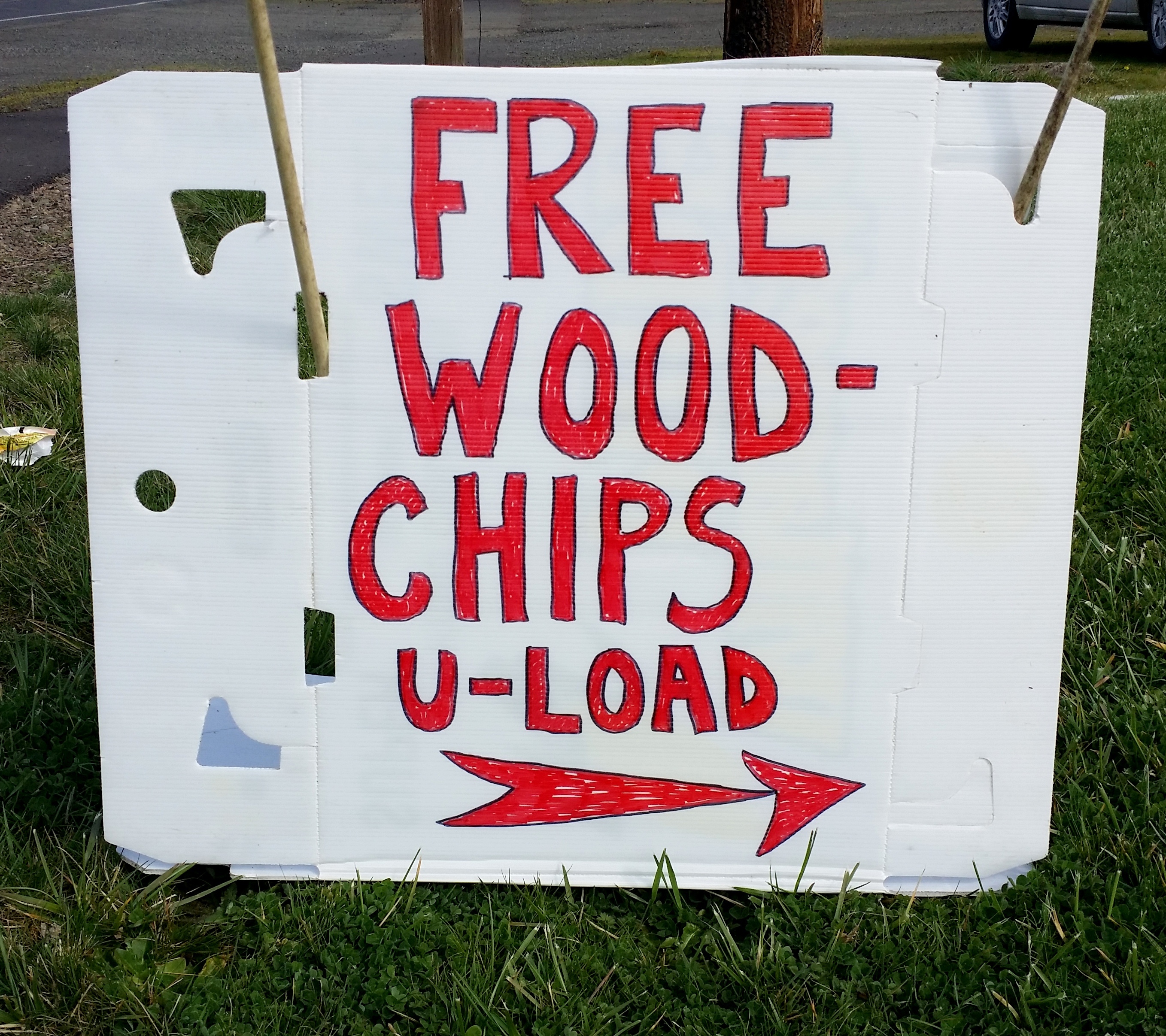
Free woodchips for our town! - a new development this year that provides a mutual benefit to our neighbors as well as the tree trimming companies that use our site.

Moving forward, the gardens are still going strong. We'll continue to grow all the usual favorites (tomatoes, cucumbers, carrots, beets etc) to share with our share-givers to keep them fed and healthy, and there will still always be some surplus of these annual veggies and fruits to pass along to charities. 

In addition though, we're shifting some of the emphasis of garden-plantings more towards winter-storage foods. Here's a post about these shifts:

"Squashes and grains and beans, oh my!" -  a shifting focus on what foods we grow... (Jenny, rt. harvesting sorghum).

The next few months we'll focus on pruning our orchards, weeding and mulching perennial beds and continuing to prep the raised beds in our greenhouses in anticipation of planting the early spring crops.

We also have some other ideas of how the Sharing Gardens may expand into a more comprehensive, "full circle" project in the months and years ahead. With environmental and economic issues so pressing, the need for models of locally based community-building processes that meet real needs (fuel, shelter, food etc) for humans, and habitat restoration for wildlife, seem more relevant than ever! 

We are curious to see what's next. Along with our continuance with the gardens, and the wood-chip/leaf and grass-clipping sites mentioned above, here are some possibilities we are exploring: firewood gleaning team, tool sharing co-op, construction-material salvaging parties and/or conservation "guilds" to spend time on each other's land cultivating wildlife habitat.  

Let us know if you'd like to be involved! 


Monday, October 3, 2022

How to Harvest and Process Dried beans

Jim and Cindy with Kidney beans.
It's possible to grow enough beans to dry and store for one's winter use. It helps to grow food in the Sharing Gardens model though, so you have plenty of help with the processing. We've been able to grow enough Scarlet Runner beans and Kidney beans over the last several years (since 2019) to supply all the beans that the two of us need for a year (Llyn and Chris) and have enough to share with the people who help with the gardens.

Here's the process we use for processing Scarlet Runner Beans:

To grow beans for winter storage or to save seed for future plantings they should be left on the vines to ripen as long as possible. Don't pick the pods until they are evenly tan and dry. If picked too green, beans won't be viable as seeds and they won't store well.  They won't ripen more after  you pick them and so pick only the ripest, fullest bean-pods. Bean pods should be brown and mostly dry to the touch.  
 
Once the frost hits, beans won't ripen any more. If there are any ripe pods left, we pull them off the vines and continue to dry them in baskets above our wood-stove till the shells are crisply dry. This prevents them from molding while in storage and, the drier the pod, the easier it is to shell. If there are any beans that you're not sure if they are fully ripe, use them first as they won't store as well as fully cured beans. Discard any beans that are obviously unripe.
 
Here, Adri and Grandpa Jim shell scarlet runner beans. If you are saving dry beans (for winter storage or seed) leave them on the vine till their shells turn tan and dry. This assures the beans are fully ripe and will make shelling easier.


Sunday, June 19, 2022

Be the one who, when you walk in,
Blessing shifts to the one who needs it most.
Even if you've not been fed,
Be bread.
--  Jelaladdin Rumi 

This post has photo-highlights from the past month and LINKS to many timely Posts (below).

Hello everyone, being a gardener helps one tune into weather-changes and the rhythms of the seasons on a much more acute level. The Pacific NW, where we live has been experiencing the profound and ongoing effects of a La Nina year. For us, this means cooler temps and lots more rain. And, while we're grateful that we're not experiencing the record-breaking heat waves of Summer-2021 (our local thermometer reached 109 F at the end of June!) - having SO much rain presents its own challenges. We've had several perennial plants die as their roots drowned (forsythia, lilac and Gogi berries). Grass is growing like crazy, which is wonderful for mulching but sometimes the grass grows so fast between mowings that we have to cut it without bagging it and come back later to collect the clippings when they've dried out a bit, otherwise they just clog the mower. And, having to run the mower twice over the same ground to cut and bag the grass uses twice as much gas!

We are so very grateful for our greenhouses which have allowed us to plant and harvest significant quantities of beets, lettuce, carrots and other cool-weather crops, in spite of the rains outside. All the plants are looking marvelous! The next ten days show a warming trend with little rain so everything planted outside should really begin to grow with summer-vigor!

Garden Gallery: 

The majority of our harvests are feeding our wonderful share-givers (volunteers) and ourselves and being donated to the Stone Soup Kitchen in Corvallis that prepares and serves/distributes 300-400 meals per month. We're donating much less to the South Benton Food Pantry this year for two reasons. One is that we've cut back on how much food we're growing and secondly, the Pantry is now blessed to be receiving donations from many new sources that weren't in place when we started our charity in 2009. Local growers contribute their surplus, and the warehouse serving the Pantry (Linn/Benton Food Share) is contracting with local farmers to grow produce too. We are happy to see how much more produce the Pantry is serving, and how much more interest the participants have in receiving it.

Garden's Progress: We don't have a lot of great pictures from this past month. When skies are overcast, and share-givers are bundled in sweatshirts and rain coats, it doesn't create a very photogenic scene! But here are a few pics to give you an idea of what we've been up to:

Llyn, in the rain, spreading straw for the cucumber patch.

Here's Chris making piles of coffee grounds and wood-ash in preparation for our 20 cucumber plants.

And here's Chris distributing compost and ashes for our corn patch.

That bright green patch in the center is all carrot plants. We estimate that it yielded over forty pounds!

Chris, Sandra and Jenny planting potatoes on a dry day. We have three, 50' rows of potatoes planted and we just hope that they haven't drowned like the first 150' of potatoes we planted back in April.

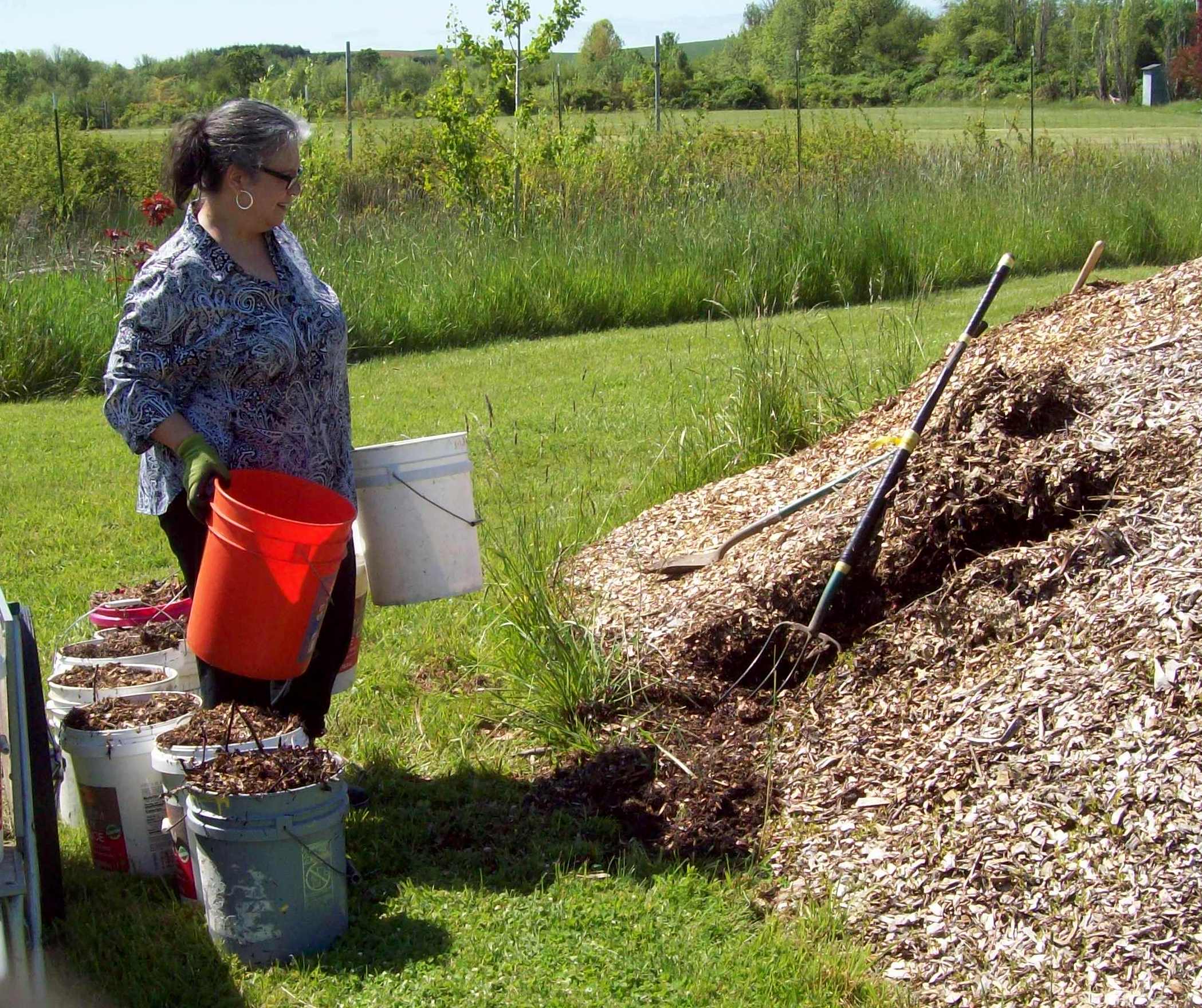
Suzanne, loading buckets of wood chips to spread around our orchard-trees to minimize weeds and keep the moisture constant through the summer.

Now, doesn't that look nice!

M.R. Tree is still bringing wood-chips as fast as our neighbors can haul them away for mulching projects of their own. Come and get 'em!

Come and get 'em!


Chris, transplanting lettuce seedlings.

Cindy, in the carrot patch
We received a wonderful donation of leaf mold (composted leaves) from our friend, Lua who runs extensive garden programs at two different schools near Corvallis.

Lua, unloading leaf mold (donated by Sunbow Farms/Harry McCormack).

...and the truck-load of 'starts' we sent back with her for her students.

LINKS to Timely Posts:

If you live in the local area and have a well, please come to this Free Well-Water Nitrate Screening on Sat. June 25 from 9:30 to 1:00. Bring 1/2 cup of unfiltered well-water. Testing takes approx. 10-minutes.

Originally published early in the pandemic, this post continues to be relevant for those who are attempting to grow more of their own food. Locally Sustainable Gardening in the Face of Supply-Chain Shortages.

Beautiful, sweet, nutrient-dense carrots from this year.

We found this next article to be well-written, informative and accurate (in our experience). If your garden-plants are suffering from nutrient deficiencies, they won't produce as well and they will be more subject to the ravages of pests. Also, if nutrients are missing for your plants, they will be missing in your diet as well.  Are Nutrient Deficiencies Ruining Your Garden?  By Amy Allen

Here is a recipe that we've developed for Delicious Tofu Crumble: a great, plant-based alternative to ground beef or sausage in recipes such as chili, or as a pizza, or salad topping. Enjoy!

Tofu Crumble makes a wonderful plant-based pizza topping.

And, though the window is closing on planting the following two crops: Scarlet Runner beans and Hooker's Blue Corn, there's probably just enough time if you live further south than us, or the killing frosts in our area, hold off next Fall. As Chris is fond of saying: "It's always best to plant for all contingencies!" (That way, if one crop fails, you have other crops to fill in their place.)

Grow Your Own Protein - Scarlet Runner Beans: For several years, Chris and I have been able to grow a year's worth of beans for us, and have enough surplus to share with others in our gardening community.

How to build a Bean Tipi/Teepee...and grow beans for winter-storage

By purchasing a heavy-duty grain mill several years ago, we've been able to grow enough corn (both blue and yellow) and two kids of sorghum that we dry and grind and use in baked goods and in a nutritious, hot breakfast cereal. Grow Your Own 'Blue Corn'

One beautiful side benefit of a rainy spring are some beautiful skies at sunset when the sun just peeks through from the west:

Sunset at the Sharing Gardens, May 2022.
And lastly...here's a

 https://media.gab.com/system/media_attachments/files/109/149/994/original/11bd6afb5e29fd2b.jpeg


Saturday, June 18, 2022

Are Nutrient Deficiencies Ruining Your Garden?

We found this article to be well-written, informative and accurate (with one caveat, see below). If your garden-plants are suffering from nutrient deficiencies, they won't produce as well and they will be more subject to the ravages of pests. Also, if nutrients are missing for your plants, they will be missing in your diet as well. Enjoy!  Chris and Llyn - Sharing Gardens

Are Nutrient Deficiencies Ruining Your Garden?  By Amy Allen

Our one caveat to the linked Post is that, under the heading: 'What are the solutions to phosphorous deficiency', the author recommends the use of horse manure. We have had very bad experiences with using uncomposted horse manure in our gardens and had a whole season of tomato and pepper plants we were germinating from seed, be wiped out before discovering the source of contamination (we were using the horse manure in our potting mix). Unless you can be sure the manure has composted for 3-5 years, test the use of it in a small area of your garden before spreading it widely.

Here are the posts we wrote about herbicide contamination from horse manure: (pic left: herbicide contamination of tomato plant).

Herbicide Contamination?  

Herbicide Contamination Update  

The best mineral additive we've found is wood ash from a clean source (no paints, pressure-treatments etc). Wood ash provides all the minerals plants need with the exception of nitrogen and sulpher. Here's a Post we wrote about using wood ash for soil fertility: Coffee Grounds and Wood Ash for Soil Fertility


Monday, June 13, 2022

Free Well-Water Nitrate Screening

Hello local folks,

The Sharing Gardens, in partnership with Oregon State University, and the cooperation of the United Methodist Church (who we share our parking lot with) is offering free well-water testing. See details below.